

You can’t relive the past, but some Midland University students are getting the opportunity to learn how historical experiences have been chronicled over the years.
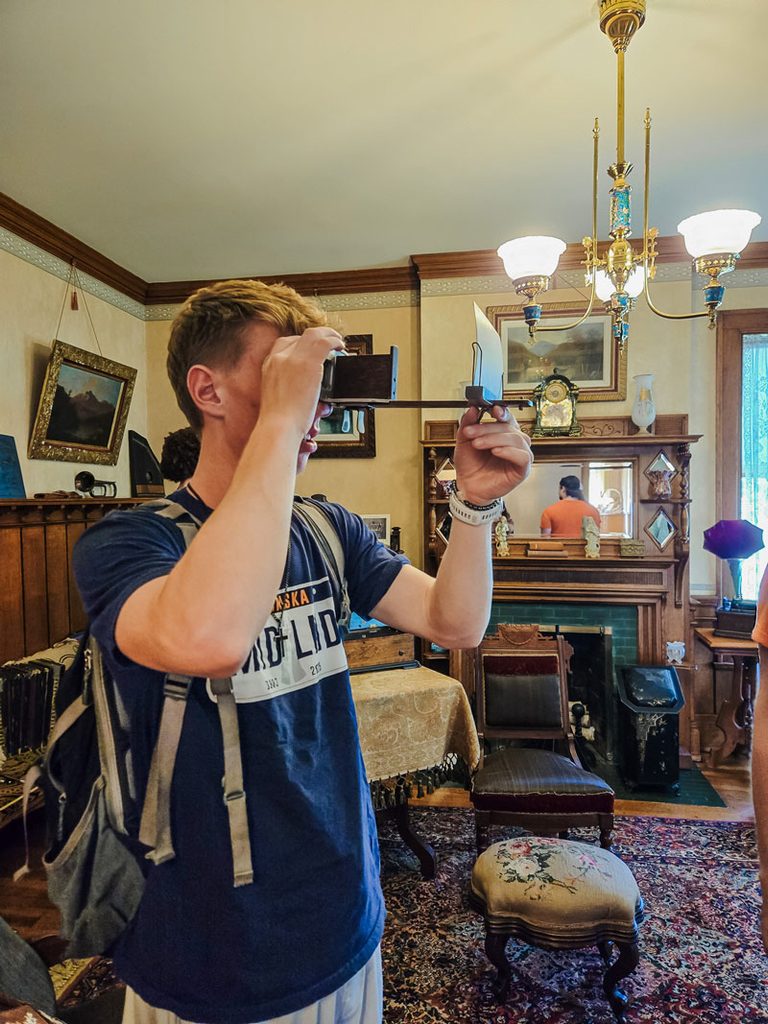
Through a variety of field trips to libraries, museums, and historical societies, students are learning the value of collecting information about some of the historical moments and people that have shaped the world today.
As an Assistant Professor of History at Midland, Brooke Schwanke believes it is important for current and future generations to understand how history is being recorded.
“There are three primary things to be an historian. You need to collect information, share information, and preserve information,” she said. “The purpose of archives is to preserve and share.”
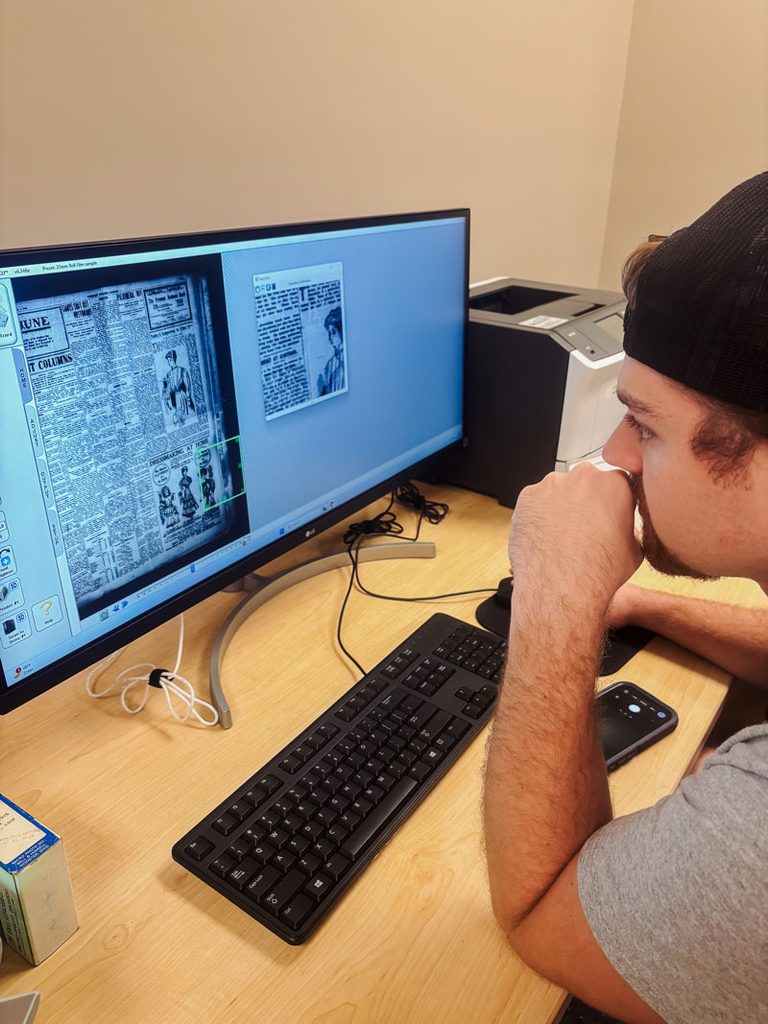
In early October, students from Schwanke’s Historical Research and Writing class visited both the Saunders County Historical Society in Wahoo and the Keene Memorial Library in Fremont.
“One of the goals of the class is to see how history can be hands-on, as well as learning about the different jobs that are available in that field,” Schwanke said. “They learned how archives are organized and utilized. At the Keene Library, we learned how to use microfilm machines and got to read through old newspapers.”
Students use information gathered during those sessions for assignments throughout the course.
But learning and preserving history goes beyond being an historian. Leland Thiel, a senior Secondary Education major, believes understanding how history impacts us today will be a valuable tool in his future career.
“I have a compressed major in History, and the field trips have definitely helped me see more options in the history field, as well as seeing exhibits and different historical pieces that will help me be a better teacher,” he said. “The trip to the Saunders County Historical Society was very helpful for my class because it opened my eyes to areas of research and information-gathering that I had not thought of before.”
Schwanke believes the best way to learn about history is by getting as close to it as possible. “I want our students to learn that you don’t have to sit in a classroom to learn about history; you can go out in the world to experience it,” she said. “It brings more energy to the group and gets them excited about history.
“Getting out and going to these places shows them that history doesn’t have to be boring.”
Part of her students’ assignments is visiting a variety of museums, including the Louis E. May Museum in Fremont, and comparing how each museum displays and shares information.
One of those visits was to the Great Plains Black History Museum in Omaha. Among the numerous items on display was the Heisman Trophy won by former Nebraska football standout and Omaha native Johnny Rodgers during the 1972 season.
“I love going to museums and other historical sites, so getting to visit those places as part of my education has been very helpful in me seeing different things and learning all the different ways history is preserved,” Thiel said. “I got to hold the Heisman Trophy, which was a very cool and unique experience.”
Schwanke works to ensure students have unique experiences, even when they can’t leave the classroom. As part of her America in the World class, she has students representing different countries to debate the Treaty of Versailles, which was signed in 1919 and essentially ended World War I.
She has even gone past their minds and into their stomachs to get her point across.
“When we were studying French history, I brought in pastries from a French bakery in Omaha,” Schwanke said. “I figured that was the closest I could get without taking them to Paris, and it was better than something they could get at their local market.”
History might not be a subject students equate with fun, but Schwanke’s efforts are working to change that narrative.
“I love seeing them get excited about what they are doing, and I enjoy seeing them love something that I also love,” she said.

